
Scent marketing in retail: The invisible secret to success


Introduction
Yesterday, as every year on November 1st, my partner and I upheld our family tradition of visiting the graves of departed loved ones. Near one such resting place is a pig farm, whose pervasive odour immediately catapulted me back, as it does each year, to thirty years ago. It was the day we buried my partner's grandmother, and that scent has remained unchanged since. This personal anecdote reminded me of how scent touches our subconscious and evokes memories, sometimes pleasant, sometimes painful, often catching us unawares.
The discussion about the use of scents in retail fascinates me. I find myself in the camp of proponents. We live in a world bombarded by visual and auditory stimuli, and I strongly believe in the notion of engaging consumers’ senses in more varied ways. On one hand, to enhance experience by evoking emotional feelings and above all, to leave a lasting impression on customers.
Scent marketing, the strategic use of scents within retail environments, is a subtle art practised by specialists which, when correctly applied, can add significant value to the shopping experience. It not only creates a pleasant atmosphere but can also significantly influence buying behaviour.
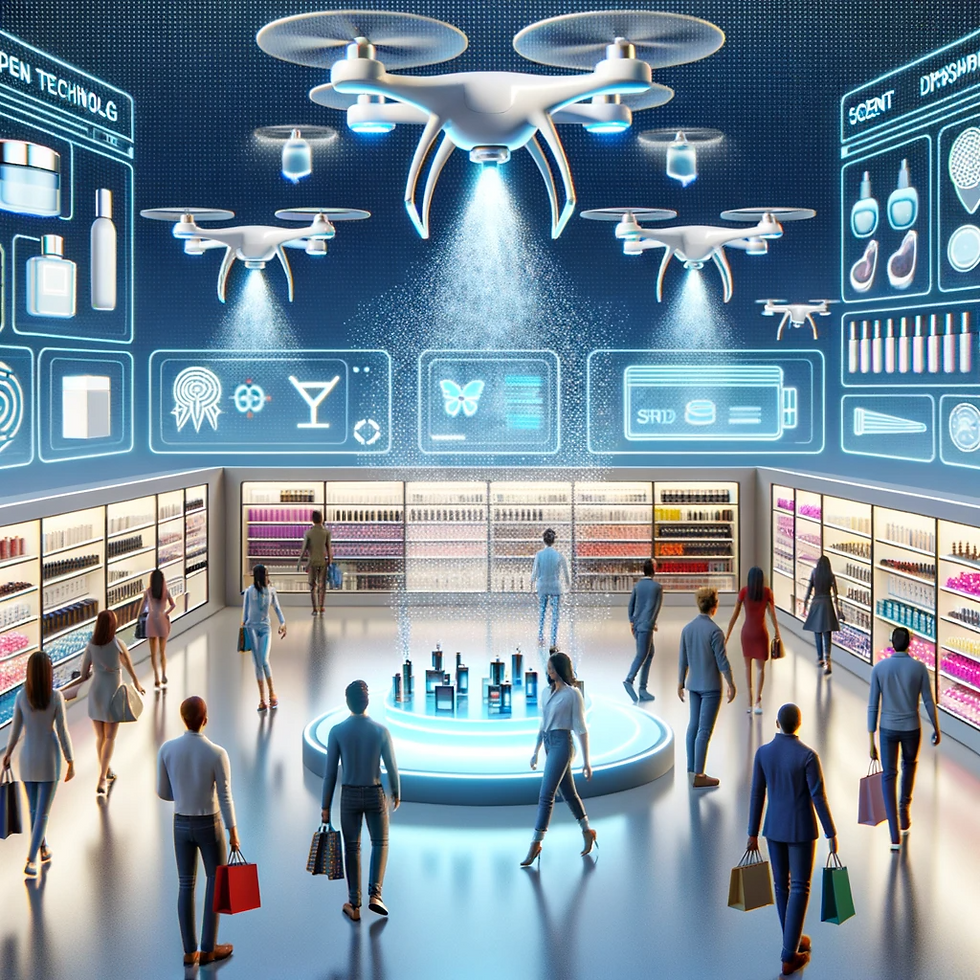
The psychology behind scent marketing
Our sense of smell is directly linked to the part of the brain that manages emotions and memories. A particular scent can unleash a flood of memories and influence our mood and behaviour. Retailers who understand this connection use scent marketing to forge an emotional connection with their customers, helping them to develop a deeper and more personal relationship with the brand. Scent acts on the subconscious and can evoke not only negative connotations but also very warm feelings. For example, covered car parks may use the scent of freshly washed linen to evoke a sense of security, primarily for women.
The aroma of success
Consider, for instance, a coffee roastery that uses the scent of freshly ground coffee beans to entice passersby. Or a bakery where the smell of freshly baked bread welcomes customers and leads them subconsciously towards the warm croissants. Luxury boutiques use subtle, bespoke scents to enhance the feeling of exclusivity and refinement, while clever booksellers may diffuse a light hint of vanilla to mimic the nostalgic feeling of reading old books.
Innovative applications of scent marketing
Scent marketing goes beyond simply spreading pleasant smells. Innovative retailers are integrating scents into their brand stories. Outdoor stores might use the scent of pine and fresh moss to simulate the experience of being outdoors, thereby making customers feel more connected to the products they sell.
Measurable results
Studies have shown that scent marketing can lead to increased sales. In one study, customers stayed up to 44% longer in fragrant retail environments, which resulted in higher revenue. A well-known clothing retailer experienced a sales increase of about 10% when a pleasant scent was diffused in their store. I know a tile, natural stone, and parquet retailer in Belgium who uses scent and told me that the difference in revenue between stores with or without scent amounts to more than 10%.
Challenges and opportunities
While the benefits are clear, the challenge lies in finding the right balance. An overpowering scent can be overwhelming, while a too subtle scent might go unnoticed. The key is customization and consistency, where the scent matches the brand image and products and is consistently present in all stores.

Future perspectives
With advances in technology, scents can now be dosed and spread in ways that were previously not possible. Retailers can now even adjust scents according to the time of day or season, making the shopping experience dynamic and fresh. Scent marketing is an invisible force that, when masterfully applied, can lead to an unforgettable shopping experience and increased customer loyalty. It is a sensory journey that is transforming the way we shop, where the only limit is creativity. But remember, it remains a specialist's job!
Luc Campo – The Retail Engine – Unlock your potential
2 November 2023
(visuals made with DALL-E 3)


Comments